
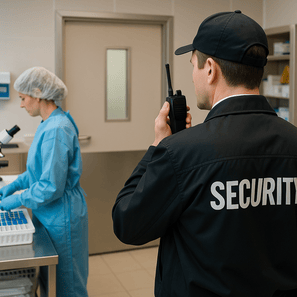
When people think about hospital security, they usually picture emergency departments, entrances, and patient units. Those areas absolutely matter, but there is a quiet part of the hospital that often carries just as much risk: the support spaces.
Labs, sterile processing, and central supply keep the entire hospital running. They handle specimens, instruments, medications, implants, and high value inventory. If something goes wrong in these areas, the impact is not just financial. It can disrupt surgeries, delay care, or create real safety problems for patients and staff.
That is why support spaces deserve the same level of attention as any front facing clinical unit when it comes to hospital security systems, healthcare access control, and HIPAA compliant surveillance.
k
k
Why Hospital Support Spaces Are High Risk
Support areas typically sit behind the scenes, away from visitors and the public. That can create a false sense of security. In reality, they often have:
-
High value items such as implants, specialty instruments, and medical devices
-
Sensitive materials including specimens, reagents, and chemicals
-
Critical equipment that, if damaged or offline, can delay care
-
Staff who work early, late, or overnight with fewer people nearby
Because these areas are not usually in the public eye, doors get propped open, badges get shared, and old access rules stay in place far longer than they should. That makes them attractive targets for theft, diversion, or simple misuse.
k
k
Common Security Gaps In Labs, Sterile Processing, And Central Supply
Every hospital is different, but SSP sees some recurring patterns when evaluating support spaces:
-
Generic access for entire departments instead of role based healthcare access control
-
Little or no video coverage at supply rooms, dock doors, or internal corridors
-
No clear separation between vendor, staff, and contractor access
-
Poor visibility into who was in a space at a given time
-
No link between hospital security systems and inventory or incident reports
None of these issues are intentional. They simply grow over time as operations evolve and nobody is specifically tasked with stepping back and designing security for these spaces.
k
k
Labs: Protecting Specimens, Reagents, And Staff
Hospital and reference labs handle a constant flow of specimens, chemicals, and equipment. Risks include:
-
Unauthorized access to restricted testing areas
-
Tampering with samples or equipment
-
Theft or misuse of reagents and controlled materials
A strong lab security design usually includes:
-
Role based access control tied to job function, not just department
-
Two factor rules for highly sensitive rooms, such as toxicology or certain research spaces
-
HIPAA compliant surveillance at entry points, workroom corridors, and specimen receiving areas
-
Clear audit trails that connect badge events to camera views when needed
When lab leaders and security teams work together, they can define who truly needs access to which zones, and for what hours, instead of granting broad permissions to everyone with a lab badge.
k
k
Sterile Processing: Securing Instruments And Workflow
Sterile processing departments (SPD) sit at the heart of surgical operations. They manage decontamination, packaging, and sterilization of instruments and trays. Risks here often look like:
-
Unsecured access from public or semi public corridors
-
Unclear separation between clean and dirty workflow
-
Loss or misplacement of costly instrument sets and loaner trays
Security design for SPD is less about heavy restriction and more about controlled, documented flow:
-
Controlled entry points with healthcare access control at staff entrances and receiving docks
-
Video coverage of case cart staging, decontamination entrance, and instrument storage zones
-
Clear access rules for vendors delivering loaner trays and equipment
-
Integration of hospital security systems with asset tracking or inventory tools where possible
The goal is to support high volume, time sensitive work while still knowing who had access to critical inventory and spaces.
k
k
Central Supply: Controlling High Value Inventory And Consumables
Central supply or materials management is the engine room for supplies across the hospital. These teams manage everything from gloves and gowns to implants and specialty devices.
Common issues include:
-
Open doors or unsecured cage areas in back hallways
-
Limited visibility around high value storage such as implants or specialty kits
-
Weak separation between staff, vendors, and environmental services access
A modern approach to central supply security often includes:
-
Zone based healthcare access control that limits high value areas to specific roles
-
Cameras focused on implant rooms, high value cages, and dock doors
-
Defined workflows for vendors that include visitor management and vendor badges
-
Event reporting and investigations tied to both access logs and video clips
This kind of structure does not slow central supply down. It provides clarity and reduces the temptation or opportunity for loss.
k
k
Integrating Security Technology Across Support Spaces
Labs, sterile processing, and central supply should not be secured in isolation. They work together every day, and the hospital security systems that protect them should, too.
Key integration points include:
-
Linking access control and HIPAA compliant surveillance so badge transactions can be verified visually when needed
-
Aligning door schedules with real operating hours instead of leaving spaces open by default
-
Connecting dock cameras and doors to remote video monitoring for after hours protection
-
Mapping support spaces into overall hospital security plans and incident response procedures
The same integrated approach that protects an emergency department or main entrance applies to these back of house environments as well.
k
k
Turning Security Data Into Actionable Insight
Support spaces generate a lot of useful data:
-
Badge events for doors and cages
-
Video analytics for loitering, motion, or after hours access
-
Incident reports around inventory discrepancies or environmental issues
With the right tools, hospital leaders can use this information to:
-
Identify patterns in access outside of normal hours
-
Spot repeated attempts to enter restricted areas
-
Correlate loss or damage with poorly controlled spaces
-
Build a case for specific improvements such as new cameras, additional card readers, or policy updates
Security in these areas is not just about catching problems. It is about reducing risk going forward.
k
k
How SSP Supports Security For Hospital Support Spaces
A partner like SSP looks at labs, sterile processing, and central supply through both an operational and security lens. That typically includes:
-
Assessing current camera coverage, door controls, and traffic patterns
-
Working with department leaders to define practical, role based healthcare access control rules
-
Designing and installing hospital security systems that are HIPAA aware and operationally realistic
-
Integrating new security measures with existing hospital platforms rather than starting from scratch
-
Providing ongoing service or co managed support to keep systems tuned and effective over time
The goal is not to turn support spaces into vaults. It is to match security to real world risk and keep the hospital running smoothly.
k
k
Conclusion
Hospital support spaces may be out of sight, but they should never be out of mind. Labs, sterile processing, and central supply are critical to patient care, clinical quality, and financial health.
By applying the same discipline used at main entrances and patient units to these back of house areas, hospitals can reduce loss, strengthen safety, and gain better control of sensitive materials and equipment. With the right combination of healthcare access control, HIPAA compliant surveillance, and thoughtful design, support spaces can become a secure, efficient backbone for the entire organization.
Talk to SSP about assessing and upgrading security for your hospital support spaces so your labs, sterile processing, and central supply teams have the protection they need to keep your facility running safely.

