
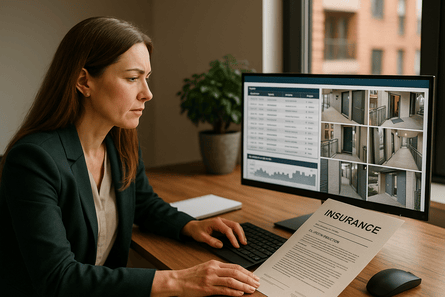
Premiums follow risk. Integration reduces risk.
Carriers price two things on your property. The likelihood that an incident occurs and the severity when it does. Integrated security systems cut both by preventing more events in the first place and documenting what happens when they do.
If your cameras, smart locks, intercoms, gates, and logs live in separate silos, you are paying an invisible tax. Incidents are harder to deter and slower to resolve. Integration turns those silos into a single picture that underwriters can trust.
k
k
What insurers want to see before renewals
Underwriters look for controls that lower frequency and severity. The most persuasive items are:
-
Access control with audit trails
Mobile credentials or PINs tied to individual residents and vendors. Immediate revoke at move out. Clear logs by user, door, and time. -
Video verification at decision points
Entrances, elevators, package rooms, garage lobbies, and loading areas with footage that captures faces and plates in usable detail. -
Well lit, well covered parking
Even lighting, camera coverage that matches risk zones, and license plate recognition at entries and exits. -
Consistent policies across the portfolio
Documented door groups, time windows, guest and vendor rules, privacy and retention policies, and an after hours playbook. -
Evidence readiness
The ability to export a clean packet that correlates access events, video clips, and plate reads with chain of custody intact.
An integrated platform makes these items normal daily practice rather than a scramble during renewal season.
k
k
Five ways integration lowers premiums and claim costs
1) Fewer incidents through deterrence and control
When the same mobile credential opens the gate, lobby, elevator, and unit, unauthorized entry drops. Time limited guest and vendor passes reduce tailgating and key sharing. In parking areas, LPR plus posted rules changes behavior. Lower incident frequency is the single strongest lever on premiums.
2) Faster, cleaner investigations
Unified logs answer who, when, and where in minutes. Pair an access event with the matching intercom snapshot and a plate read from the gate. When you can provide a clear timeline, carriers close claims faster and contest fewer payouts.
3) Lower severity through early alerts
Door prop notifications, dwell time in no parking zones, and after hours entries without credentials surface small issues before they become large losses. Early intervention often means a near miss instead of a claim.
4) Reduced fraud and dispute risk
Video tied to specific entry events makes it harder to dispute responsibility. That protects both residents and ownership and shows your insurer that controls are working.
5) Lower operational leakage that carriers notice
Rekey free turnovers, fewer lockouts, and fewer after hours truck rolls are not only operational savings. They are signals of a well controlled environment that underwriters factor into their overall appetite for the risk.
kk
k
Controls that influence insurance outcomes
Use this checklist to align your program with what carriers value.
-
Apartment access control
Mobile credentials by default. PIN and limited fob options for non app users. Auto revoke at move out through PMS integration. -
Smart locks for condos and amenities
Battery backed devices with local credential caching so doors keep working during outages and logs sync on recovery. -
Video intercom for apartments and gates
Visual verification with remote unlock. Guest access by QR or PIN that is time limited and logged. -
Parking lot surveillance and LPR
Plate capture at entries and exits, even lighting, posted parking rules, and alerts for tailgating or prolonged dwell. -
Unified console and reporting
One place to export correlated logs and video with clear chain of custody. Monthly KPI summaries that prove control. -
Privacy and retention policy
Posted signage, defined retention windows, resident data request process, and documented access to evidence.
k
k
What to include in an insurer friendly evidence packet
When an incident occurs, send a complete packet instead of piecemeal files.
-
Incident summary with date, time range, and locations
-
Access control events filtered by user, door, and time
-
Intercom snapshots or video stills at the moment of entry
-
LPR plate reads at gate in and out
-
Camera clips with timestamps that match the log timeline
-
Chain of custody note and file hashes if your platform supports them
-
Property map or camera layout for context
Fast, organized documentation shortens the claims cycle and demonstrates diligence.
k
k
KPIs that help at renewal time
Track these monthly and include a one page summary with your renewal submission.
-
Lockout rate per 100 units
-
Door prop minutes at key pedestrian entries
-
After hours entries without credentials
-
Parking incidents per 100 spaces
-
Mean time to evidence packet
-
Guest and vendor pass usage and violation rate
-
Offline minutes per door or controller
Trends matter. Insurers respond well to a simple chart that shows improvement over two to four quarters.
k
k
A realistic pathway to integration
Integration does not require a rip and replace project. Most portfolios move in phases.
-
Assess current locks, readers, intercoms, cameras, gates, lighting, and policies
-
Standardize credential types, door groups, time windows, and guest and vendor templates
-
Integrate your PMS so move ins and move outs drive credential changes
-
Prioritize parking and perimeter entries where risk and claims are highest
-
Unify logs and video into one export process with a clear evidence checklist
-
Review KPIs quarterly and adjust schedules, coverage, and signage
SSP can support each step with design, retrofit friendly hardware selection, cloud configuration, PMS integration planning, and on call emergency support. SSP does not provide continuous live monitoring. The platform generates alerts and logs, and our team assists with triage and service dispatch when needed.
k
k
Bottom line
Integrated security lowers risk, and lower risk lowers premiums. When underwriters see consistent controls, unified evidence, and improving metrics, your property becomes a better insurance story.
Want a property specific plan that ties controls to premium goals
Talk with SSP. We will map your current environment, outline phased upgrades, and create a renewal ready packet format with the KPIs carriers expect.