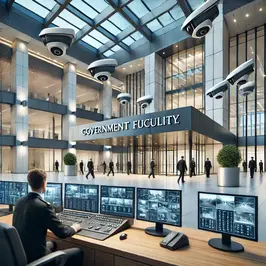
In today’s rapidly evolving security landscape, government buildings and public sector institutions must prioritize high-quality video surveillance systems to protect personnel, sensitive data, and critical infrastructure. A robust surveillance system is essential for preventing security threats, monitoring public spaces, and ensuring compliance with regulatory standards.
From federal offices and municipal buildings to law enforcement agencies and military bases, every government facility faces unique security challenges that demand state-of-the-art monitoring solutions.
This article explores the importance of modern video surveillance systems in the government sector, the latest advancements in security technology, and how agencies can enhance protection with integrated surveillance solutions.
k
k
The Role of Video Surveillance in Government Security
🔹 1. Threat Prevention & Incident Deterrence
Government buildings are often high-profile targets for crime, vandalism, terrorism, and civil unrest. Deploying a comprehensive security camera system acts as a visual deterrent, discouraging unauthorized access, suspicious activity, and internal misconduct.
✔ Perimeter monitoring ensures restricted areas are secured from trespassers.
✔ Facial recognition and access control integration detect unauthorized individuals in real time.
✔ AI-powered behavioral analytics help identify potential threats before incidents occur.
🔹 2. Public & Employee Safety
Government offices, courthouses, and civic centers experience high foot traffic, making public safety a top priority. Surveillance cameras provide real-time visibility, helping security teams respond quickly to disturbances, medical emergencies, or security breaches.
✔ Live monitoring in lobbies, hallways, and common areas ensures a safer environment.
✔ Integration with emergency communication systems speeds up response times.
✔ AI-powered video analytics detect unusual crowd behavior or aggressive interactions.
🔹 3. Securing Sensitive Data & Critical Infrastructure
Government agencies handle confidential information, from classified intelligence to financial records. Cybersecurity and physical security must go hand in hand to protect against data breaches, insider threats, and unauthorized access.
✔ High-security areas require restricted access with biometric authentication.
✔ Encrypted cloud storage protects recorded footage from cyber threats.
✔ Video surveillance with audit trails ensures compliance with federal security policies.
🔹 4. Compliance with Government Security Standards
Federal, state, and local agencies must comply with strict security regulations, such as:
▶ FISMA (Federal Information Security Management Act) – Protecting information systems from cyber threats.
▶ NDAA (National Defense Authorization Act) Compliance – Ensuring government facilities use trusted surveillance equipment.
▶ CJIS (Criminal Justice Information Services) Standards – Governing security requirements for law enforcement agencies.
By implementing a compliant surveillance system, agencies reduce legal liabilities and strengthen national security protocols.
k
k
Key Features of an Effective Government Surveillance System
Government agencies require cutting-edge surveillance technology to maintain 24/7 security monitoring across all locations. Here are the top features modern government surveillance systems should include:
✔ AI-Powered Motion Detection – Reduces false alarms by distinguishing between human movement and environmental factors.
✔ Facial Recognition & Badge Authentication – Prevents unauthorized personnel from accessing restricted areas.
✔ High-Resolution Cameras (4K & Night Vision) – Ensures clear visibility in low-light conditions.
✔ Smart License Plate Recognition (LPR) – Enhances security for parking areas and government vehicle fleets.
✔ Cloud-Based Video Storage & Remote Access – Enables security teams to monitor footage from any location securely.
k
k
Emerging Trends in Government Video Surveillance
🔸 AI & Machine Learning Integration – Identifies suspicious activity and predicts potential security breaches.
🔸 Drone Surveillance for Perimeter Security – Enhances monitoring for large-scale government campuses.
🔸 IoT & Smart City Integration – Connects surveillance with emergency response systems, traffic management, and law enforcement databases.
🔸 Cybersecurity-Enhanced Video Encryption – Prevents hacking and data manipulation of surveillance footage.
As threat landscapes evolve, these advanced surveillance solutions are becoming essential for maintaining national and public safety.
k
k
Benefits of Implementing a Centralized Video Surveillance System
🔹 1. Faster Emergency Response
🚨 Live video monitoring allows security teams to respond instantly to intrusions, suspicious behavior, and active threats.
🔹 2. Cost Savings & Reduced Liability
💰 Prevents property damage, theft, and security breaches—reducing long-term operational costs and legal risks.
🔹 3. Improved Operational Efficiency
📊 Integrated video analytics help security teams optimize surveillance strategies and automate security reporting.
🔹 4. Scalable & Future-Proof Security Infrastructure
🏢 Cloud-based surveillance allows agencies to expand, upgrade, and integrate new technologies without major overhauls.
k
k
Conclusion: Strengthening Government Security with Advanced Surveillance
In an era of increasing security risks and technological advancements, government agencies must modernize their surveillance systems to stay ahead of evolving threats. By adopting AI-driven, cloud-integrated, and highly secure video monitoring solutions, agencies can:
✔ Enhance public safety & national security
✔ Protect classified data & critical infrastructure
✔ Improve incident response & law enforcement coordination
✔ Maintain compliance with federal security standards
🚀 Upgrade your government facility’s surveillance strategy today! Contact SSP for customized security solutions that ensure maximum protection and compliance.